About A. E. Fenwick—Historical crime fiction from the darker corners of Victorian Scotland.
I’m a woman who has spent perhaps too many years in forensic work with a focus on violent sex crimes. Which means I have looked directly at the worst parts of human nature and can now confirm, professionally, that most of it is deeply, disappointingly boring. That’s why my crime fiction focuses on victims, their families, and their communities rather than the perpetrators. The villains have never been the interesting part of the story, no matter how many prestige dramas insist otherwise.
What I did take from that work is an ear for how people actually talk when something terrible has happened to them—the flatness, the odd jokes, the practical questions about what happens next. Grief rarely looks like it does on television, and neither does survival. I try to write both the way I’ve actually seen them, which is quieter and stranger than fiction usually allows.
My style’s been called “Nordic Noir in a kilt,” which I’m choosing to take as a compliment—and may yet end up on my business card.
Alba
I love Scotland the way some people love a difficult relative—fiercely, unreasonably, and without any interest in your opinion about it. Glasgow specifically has my whole heart; I set my books within its rain-slicked reaches, partly because of that affection, and partly because a city with that much history holds onto its dead rather well.
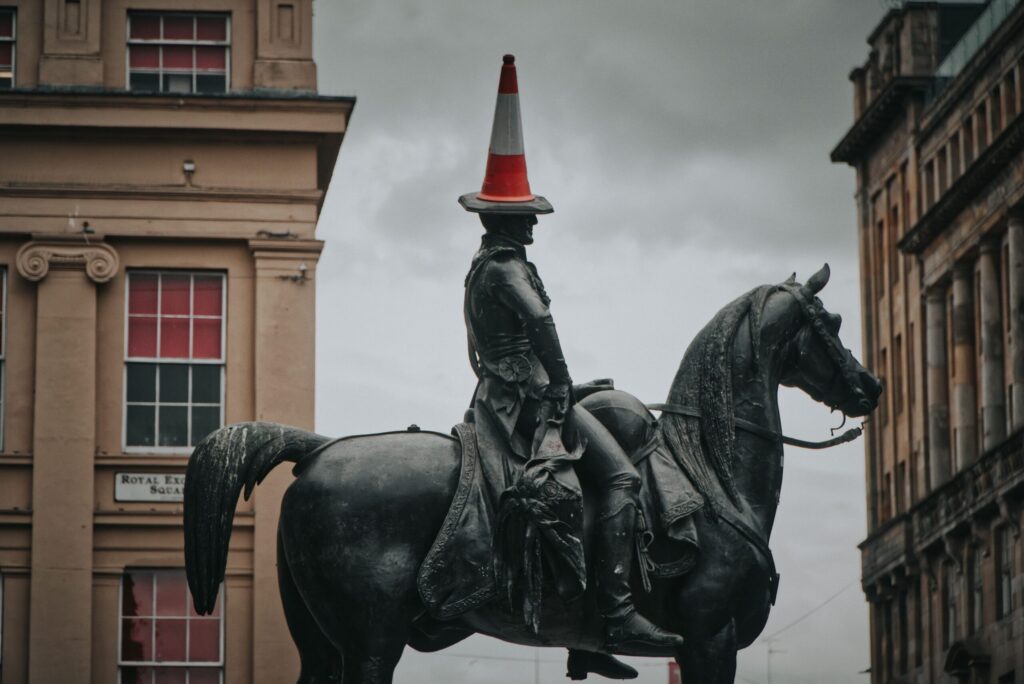
Why the Victorian Era
I’m fascinated by the Victorian era—not the corseted, doily version people imagine, but that precise, precarious moment when industrialisation and modernity went completely off the rails. Everything is about to change forever, and nobody quite realises it yet. There’s something irresistible about writing people who don’t know they’re living through a hinge point in history. They’re too busy worrying about rent, or reputation, or the weather, to notice the ground shifting under them—which is, I think, exactly how most of us live through history in real time.
On Writing
I don’t outline so much as I interrogate. Every book starts with a question I’m genuinely unsure how to answer, and I write my way toward something like a conclusion, dragging a cast of stubborn, frequently uncooperative Glaswegians along with me. If a character surprises me, I keep it. If a scene bores me, out it goes—a habit I picked up somewhere I won’t specify, for reasons that should by now be obvious.
Beyond that, I prefer to leave a few things unexplained. It seems appropriate.